Bringing together life sciences
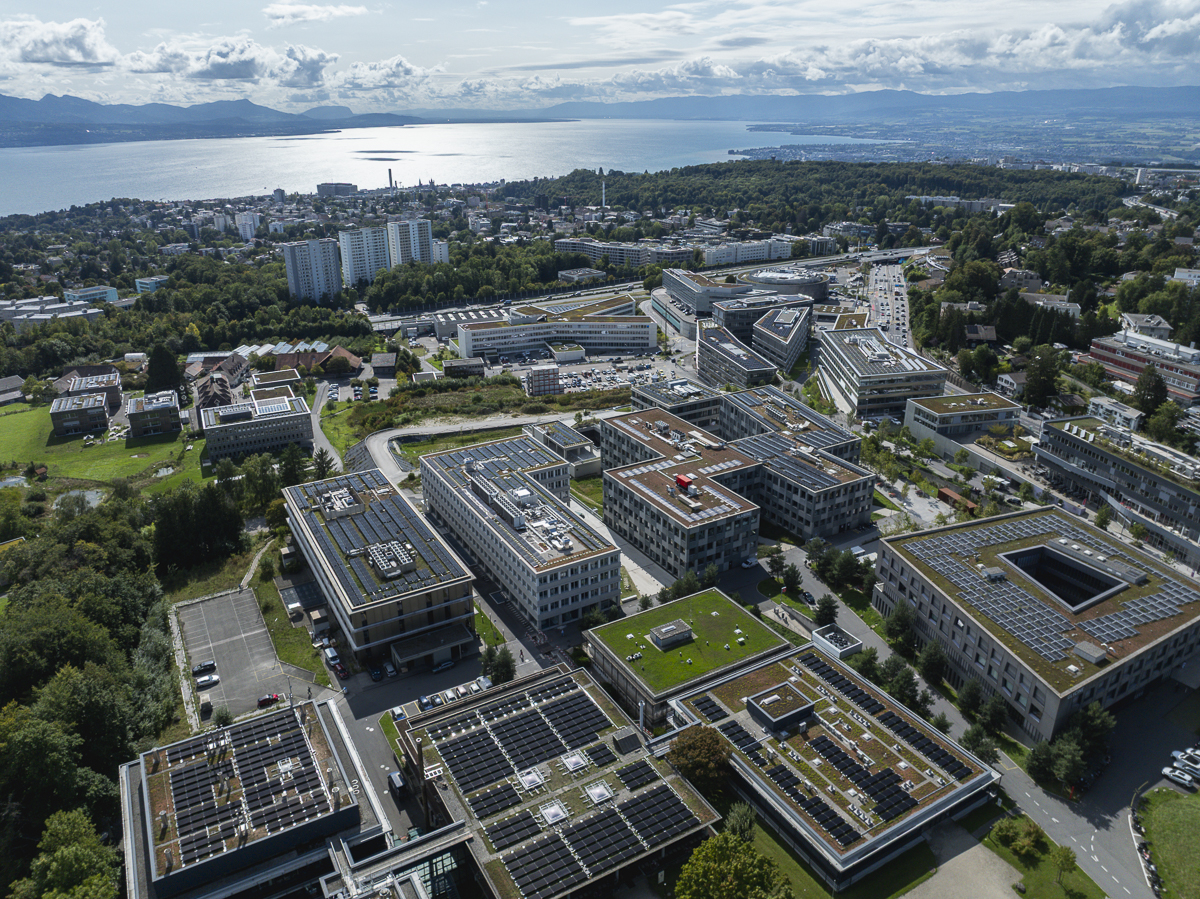
Biopôle offers state-of-the-art facilities to over 200 companies, from start-ups to multinationals. It’s also home to more than 5 major research institutes. Its vibrant community includes over 3,500 people, who are developing innovations in pharma, medtech, biotech, digital health and more.
Biopôle’s vibrant community includes over 2,500 people, who collaborate extensively. This convergence of talent and expertise facilitates the development of cutting-edge innovations in pharma, medtech, biotech and digital health, among other sectors. Biopôle SA, which owns, manages and promotes the life sciences campus, also supports the community: it provides financial help through its Start-up Fund, business strategy support via Vanguard Accelerator and an abundance of networking opportunities.
Health and Life Sciences
Immunology
Renowned expertise in vaccine development including therapeutic and preventive vaccines against pathogens, chronic diseases and allergies. Innovative approaches focused on vaccine formulation and virus-based vaccines and immuno-engineering.
Personalized medicine
The medical discipline that strives to the customization of healthcare, with medical decisions, practices, and/or products being tailored to the individual patient’s needs all across the healthcare value-chain. By concentrating their work on the knowledge of the human being and illness, with the patient as the main actor, researchers aim to develop new therapeutic solutions, and to improve the diagnostic tools, the prevention, the quality of treatment, help and support for patients.
Neurosciences
Aiming at engineering the nervous system to improve sensation, cognition, and mobility. Neurosciences strives to create solutions for new markets using bioengineering and neuro-prosthetics to improve human lives. Leading cutting edge research in different neuroscience areas is only possible by studying, in particular, the standard or pathological behaviours of the brain, both in human beings (adults or children) and animals.
Oncology
Innovative technologies to better diagnose and treat cancer using state-of-the-art knowledge and platforms to discover biomarkers and develop efficient small molecules, antibodies and cell therapies.
MedTech
Medical technology is any technology used to save lives or transform the health of individ- uals. suffering from a wide range of conditions. In its many forms, medical technology is already diagnosing, monitoring and treating virtually every disease or condition that affects us.
Digital Health
The broad scope of digital health includes categories such as mobile health (mHealth), health information technology (IT), wearable devices, telehealth and telemedicine, and personalized medicine.
Healthcare
Healthcare is the maintenance or improvement of health via the prevention, diagnosis, treatment, recovery, or cure of disease, illness, injury, and other physical and mental impairments in people.
Projects
New DNA stain lights up living cells
New DNA stain lights up living cells
Read moreBy combining two molecules, scientists have developed a DNA stain that that can be used to safely image living cells.
3D-mapping a new drug-delivery tool
3D-mapping a new drug-delivery tool
Read moreScientists were able to study the 3D structure of cubosomes in detail for the first time for possible future use in medicine and food science.
A new way to treat colon cancer
A new way to treat colon cancer
Read moreVitamin A can treat resistant colon cancer, preventing cancerous stem cells of the colon from growing uncontrollably and spreading.
Partners

Université de Lausanne
The University of Lausanne is composed of seven faculties, 14,300 students and 3,000 researchers. In an international atmospere, the UNIL emphasises on an interdisciplinary approach, with close cooperation between students, teaching staff, and professors. The UNIL is renowned for its innovative teaching methods.

Centre Hospitalier Universitaire Vaudois
The University Hospital of Lausanne (CHUV) is one of the 5 Swiss university hospitals. Through its collaboration with the Faculty of Biology and Medicine of the University of Lausanne, the CHUV plays an important role in european advances for medical care, medical research and training. The CHUV employs 10’000 collaborators of 113 nationalities.

HES-SO
The largest University of Applied Science in Switzerland comprises 28 schools of higher education with 19’400 students and six faculties for Design and Fine Arts, Business Management and Services, Engineering and Architecture, Music and Performing Arts, Health and Social Work.

ISREC
The independent ISREC Foundation is focused on supporting innovative cancer research in Lausanne and western Switzerland, in particular at the frontier of translational oncology that has promised to positively impact the future treatment of human cancer.

Swiss Institute of Bioinformatics
SIB is a nonprofit organization federating 65 Swiss research and service groups expert in bioinformatics. SIB’s 800 scientists join forces to advance biomedical research by providing life scientists and clinicians with state-of-the-art bioinformatics resources, expertise, trainings, and services.

Ludwig Cancer Research
Ludwig Cancer Research is an international community of distinguished scientists dedicated to preventing and controlling cancer. American businessman Daniel K. Ludwig began to support cancer research with the establishment of the Ludwig Institute for Cancer Research in 1971. Today, the scientific efforts endowed through his resources have grown to encompass the Ludwig Institute and the Ludwig Centers and professorships at six U.S. institutions.

Unisanté
Unisanté is a university center for general medicine and public health, covering the entire healthcare chain: primary care, care of vulnerable populations, occupational medicine, health promotion and prevention, organization of the healthcare system, as well as research and university teaching. Its aim is to maintain and improve the health of the people of Vaud.